New Web-based Tool Unlocks Mysteries of Great Lakes Fish Behavior
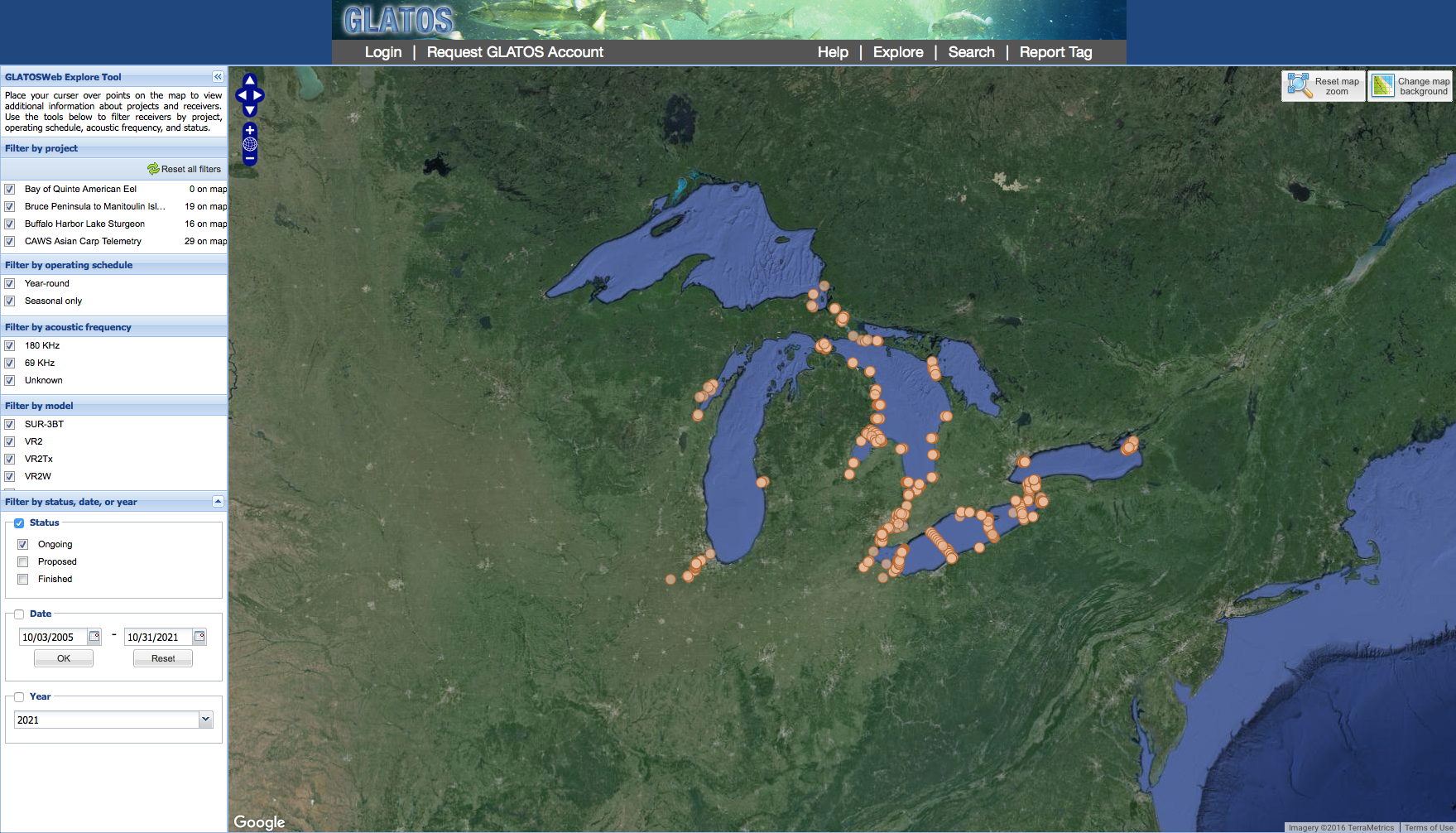


The Great Lakes Fishery Commission and the Great Lakes Observing System announce the launch of a web-based Great Lakes Acoustic Telemetry (GLATOS) tool – data.glos.us/glatos – that promotes collaboration among fisheries researchers and managers to better understand migration, ecology and spawning behaviors of Great Lakes fish species.
In 2010, the Great Lakes Fishery Commission acquired acoustic telemetry equipment and developed a framework for supporting studies that use this technology to increase understanding of key species in the Great Lakes and connecting channels. GLATOS currently includes five major projects with 337 receivers. The system will track more than 1700 fish of four species tagged between 2010 and 2013.
Fish tagged for tracking by GLATOS include lake trout, walleye, sea lamprey, and lake sturgeon. The information from the tracking will influence a range of fish population restoration actions including improved sea lamprey control, better data for fish stocking decisions, and enhanced understanding of fish spawning behavior.
“The GLATOS tool will be extremely valuable for researchers planning to use acoustic telemetry technology to answer fisheries management and ecology questions in the Great Lakes region,” said Chris Vandergoot, an Ohio Department of Natural Resources Fisheries Biologist. “The ability to see where current and prospective acoustic arrays exist will allow researchers to augment existing arrays and establish new arrays in areas where they don’t exist. In addition to facilitating collaborative fishery research projects, the GLATOS tool allows the public to learn more about fish movement studies currently underway in the Great Lakes region.”
LimnoTech, an environmental engineering consulting firm, and Applied Science Associates (ASA), a global technology and science solutions company, designed and constructed the web-based tool and database.
The project team will be hosting a webinar to demonstrate the functionality of the tool and to provide information on how to contribute data. The webinar will be held on Thursday, May 24, 2012 at 11:00 a.m. To register, visit the following site.